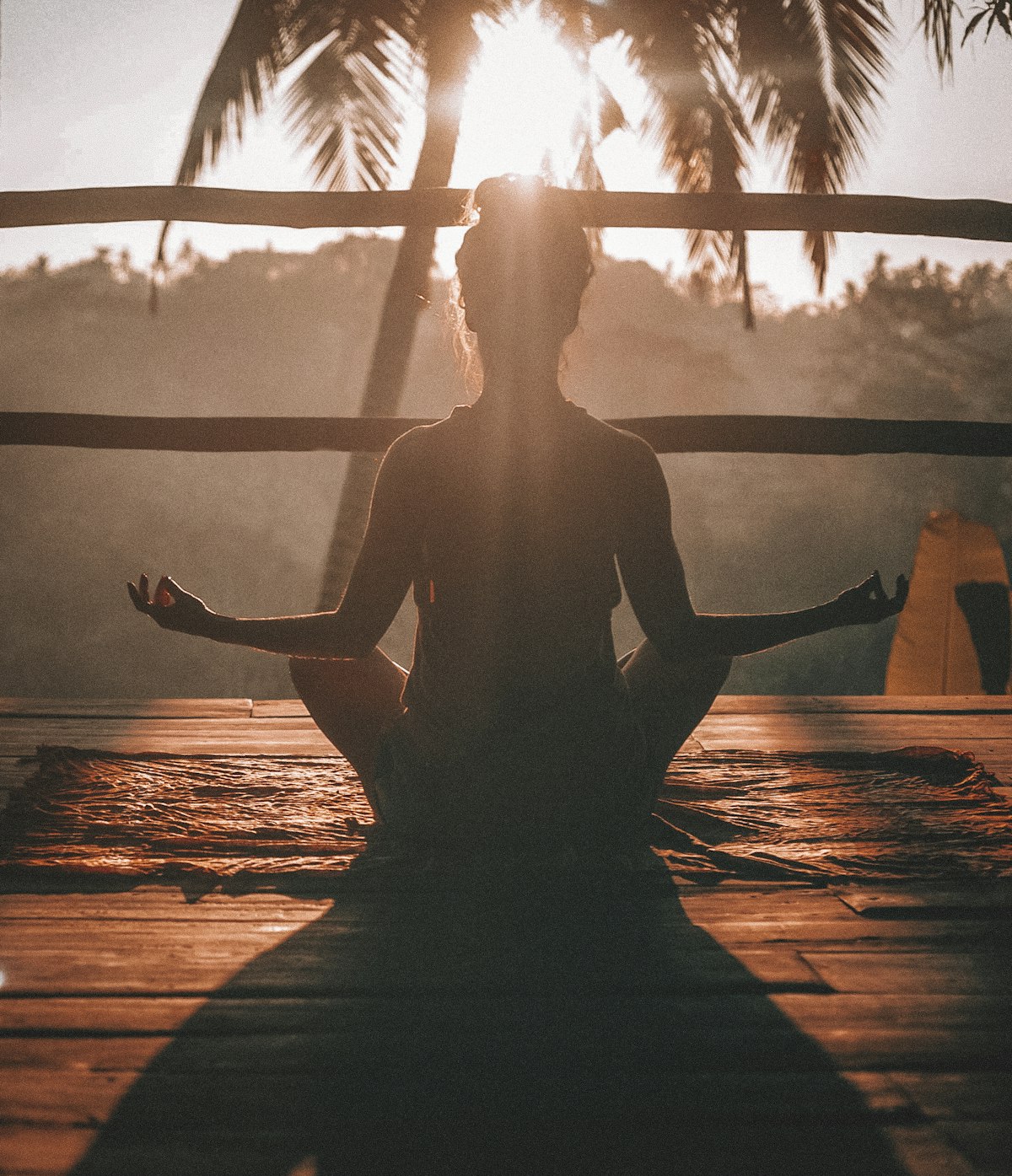
Qi Gong is often described as “meditation in motion.” That description is not wrong, but it sells the practice short. It is a 4,000-year-old system for cultivating vital energy — the life force called Qi — through coordinated breath, movement, and focused intention. The word “Gong” means cultivation: the skill that develops through patient, consistent practice over time.
You are not just learning to move slowly. You are learning to sense something that modern life trains out of most of us — an awareness of your own inner state, your energy, your breath, and the quality of your attention in any given moment.
I came to Qi Gong through the Pureland Buddhist tradition. What I share here comes from that lived practice — and anyone starting fresh will find a genuine beginning in these pages.
What Qi Gong Actually Is
Qi is the word Traditional Chinese Medicine uses for the vital energy that animates all living things. It flows through the body along invisible pathways called meridians. When the flow is clear and unobstructed, health and vitality follow. When it is blocked or depleted, imbalance results. Qi Gong practice works with that flow — restoring it, strengthening it, and bringing it into conscious awareness.
Gong means cultivation: the skill developed through steady, disciplined practice. This is not a casual workout. It is a practice with a depth that opens gradually, session by session, over months and years.
The three pillars of all Qi Gong are body (posture and movement), breath (conscious regulation), and mind (focused intention and awareness). Every style of Qi Gong, regardless of its tradition or school, works with these three together. When they are unified — when your body is aligned, your breath is conscious, and your attention is present — something shifts. Practitioners describe it differently: warmth, tingling, a quality of aliveness. The Chinese tradition calls this the movement of Qi. You do not need to believe any particular cosmology to feel it. You just need to practice.
The Main Schools — And Why It Matters Which One You Find First
There are over 1,500 documented styles of Qi Gong. They are typically grouped into five main schools:
- Taoist Qi Gong — The oldest and most widely practised. Follows the rhythms of nature, the seasons, and the Tao. Flowing, circular movements that mirror natural phenomena.
- Buddhist Qi Gong — Cultivation of mind and moral will. Practice as a path to inner liberation and compassion. Stillness, observation, and devotional awareness are central. The Pureland tradition sits within this school.
- Medical Qi Gong — Focused on health and longevity. Based on acupuncture meridian theory — specific movements activate specific meridians. Widely practised in Chinese hospitals and integrative medicine settings.
- Martial Arts Qi Gong — Internal energy cultivation for resilience and physical power. Tai Chi Chuan is the most widely known derivative in the West.
- Confucian Qi Gong — Mental cultivation and clarity. Least widely practised today.
Why does your first school matter? Because Qi Gong transmits something that is specific to the lineage you learn it from. A martial arts lineage feels different from a Buddhist one, even when the movements look similar. Starting with a real teacher from a specific tradition gives you an internal reference point. Without it, you are learning choreography, not practice.
Your First Practices — What to Do on Day One
Start here. These foundational practices are common across nearly all schools:
Zhan Zhuang — Standing Like a Tree
The single most universally taught beginner entry point. Stand with feet shoulder-width apart, knees gently bent, arms raised as if holding a large tree. Spine straight. Eyes soft or closed. No force. The only effort is maintaining the position while the mind settles into stillness.
Begin with two to five minutes. Many practitioners build to twenty or forty minutes over months. In the early sessions, you will feel restlessness. Stay. Then you will feel warmth in the palms. That is the first direct experience of Qi becoming conscious to you.
Ba Duan Jin — The Eight Brocades
One of the most ancient documented Qi Gong sets, traceable to the Song Dynasty (960–1279 CE). Eight standing movements, each targeting a different meridian or organ system. Slow, fluid, coordinated with breath. A full set takes fifteen to twenty minutes and is learnable within a few sessions. This is a complete beginner practice in itself.
Natural Breathing Awareness
Before any movement: spend three to five minutes simply observing the breath without changing it. Allow the nervous system to settle. In most traditions, this is not preparation for the practice — it is the practice. Learning to observe without intervening is the foundation of everything else.
General guidance for the first month: practice daily, even for ten minutes. Slow is slower than feels natural — speed is the most common beginner error. Keep the same three or four foundational movements for at least four weeks before expanding. The practice “clicks” around week four to six, when you shift from learning choreography to moving with awareness. That threshold is worth waiting for.
Need help with staffing?
We place CRM and Marketing Automation professionals across the US and Canada.
What Practitioners Report — Honest, Not Hype
This is not a list of medical claims. It is what practitioners describe from experience — and it is worth reading honestly, because the reported experience of a sustained Qi Gong practice is genuinely distinctive.
Physical
- Greater flexibility and joint mobility, particularly in the spine, hips, and shoulders
- Improved posture and body awareness — practitioners often report standing taller without effort
- Increased physical stamina and leg strength, especially from Zhan Zhuang standing practice
- Reduced tension in the neck, jaw, and upper back — areas where stress accumulates over years
- Better balance and coordination in everyday movement
Mental and Emotional
- Heightened calm after practice — alert stillness, not drowsiness
- Reduced reactivity: situations that previously triggered anxiety feel more manageable
- Greater mental clarity; practitioners report quieter, cleaner thinking
- Improved sleep quality, particularly falling asleep more easily
- Emotional groundedness — less swept by mood fluctuations throughout the day
Energetic
- Warmth and tingling in the palms and limbs during and after practice
- A felt sense of vitality that builds with practice rather than depleting
- Growing sensitivity to your own internal state — a felt vocabulary of the body that deepens over time
The energetic experiences surprise most new practitioners. Many expect the physical benefits and discover the emotional ones. The Qi sensations — the warmth, the tingling, what some describe as a magnetic quality between the palms — these tend to catch people off guard. They are not metaphor.
Go Deeper with Saad Ahmed and Digital Aura
I am Saad Ahmed — the founder of CRM Force and a practitioner of Qi Gong through the Pureland Buddhist tradition. Beyond my work in the CRM and technology space, I built Digital Aura as a platform for people who want to go deeper into meditation, energy work, and inner transformation.
The practices I write about here are the same ones I return to daily. Qi Gong, in the Pureland tradition, is not a fitness method — it is a complete path of inner cultivation, and it changes you in proportion to your commitment to it.
If this article has opened something for you, the most honest next step is to begin. And if you would like a guided starting point, I created a free meditation experience through Digital Aura — designed to help you reconnect with the stillness at your centre. It is the same quality of inner work I bring to my own practice, made accessible for anyone.